
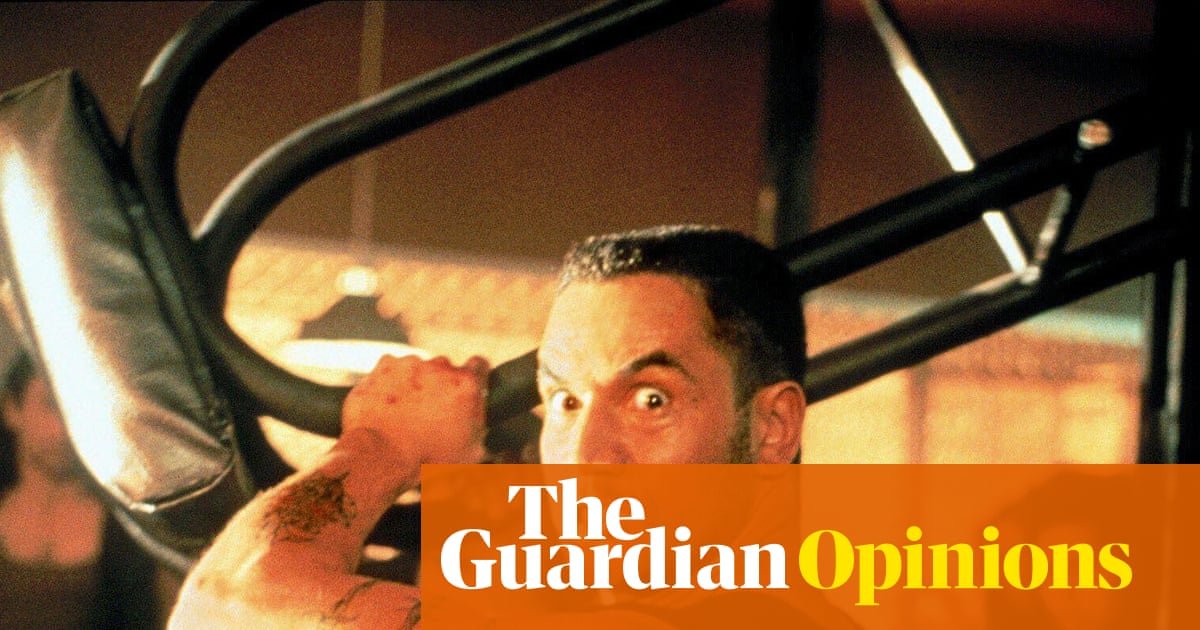
Iin 1994, the New Zealand filmmaker Lee Tamahori made one of the biggest debuts of the decade, firing on all six cylinders with his heartbreaking social realist melodrama Once Were Warriors. The Hekes are a working-class Maori family in South Auckland: Temuera Morrison is the boozy, pugnacious and bragging alpha-male welfare recipient Jake, who comes home from drinking at the pub with his pathetic sycophantic friends to terrorize and assault his wife Beth, played by Rena Owen, and their five children. He is completely indifferent to the fate of his two eldest sons, who are embroiled in gangland culture and crime, and of his sensitive daughter Grace, who has a talent as a writer. One son gets gang tattoos; the other is taken to a youth reform center where he is at least taught the customs of Maori culture – the haka and the taiaha warrior spear – and taught dignity and self-respect. But back at Jake’s chaotic home, Grace is raped by Jake’s grotesque friend “Uncle Bully”; Disaster ensues and Beth passionately confronts the wretched Jake: “Our people were once warriors, but unlike you, Jake, they were people of mana, pride; people of spirit…”
Tamahori let loose with all this emotional violence, delivering sledgehammer blows with the pub scenes, the home scenes and the gang ritual initiation scenes, handling them with confidence and verve. He created a brave, heartfelt image with a hint of ’90s brashness and nonsense. It was a hit with audiences and critics, and – for better or worse – deeply impressed industry executives in Hollywood, who could see how Tamahori could bring this energy and flair to mainstream genre material.
In America, Tamahori made the noir thriller Mulholland Falls, about violent LAPD officers who don’t care about procedures, and then the David Mamet-written survival thriller The Edge with Anthony Hopkins and Alec Baldwin as two men who trek through the wilderness after their plane crashes. (This moderate film gained cult status when producer Art Linson wittily wrote about the chaotic conditions of filming with a trained bear in his funny Tinseltown memoir What Just Happened?). along Came a Spider was a serviceable thriller, and he had another payday as director of the second in the triple-X franchise XXX State of the Union.
But the high point, or perhaps low point, of Lee Tamahori’s Hollywood career was the Bond film Die another day in 2002, with Pierce Brosnan; it was the Bond film that was ridiculed for having the worst gadget in 007 history: the invisible car. What is the point of an invisible car, the audience wondered? It was a vehicle that makes it very difficult to remember where you parked it.
After this, Tamahori found a more interesting form. His 2011 The Devil’s Double starred Dominic Cooper as Saddam Hussein’s hideous son Uday as well as Uday’s decoy double, deployed to protect the young tyrant prince from assassination or kidnapping: it was a snappy, watchable film that avoided the usual doppelgänger clichés. And in later years, Tamahori returned to the subject of Maori culture, making The Convert in 2023, in collaboration with Australian critic and screenwriter Shane Danielsen. Tamahori was an excellent director, but it was his first film, the heartfelt Once Were Warriors, that was his greatest work.
Source link
Film,New Zealand,Māori,Die Another Day,James Bond,Asia Pacific,Culture,Thrillers,World news , , #debut #film #Warriors #showed #Lee #Tamahori #director #courage #flair #Movies, #debut #film #Warriors #showed #Lee #Tamahori #director #courage #flair #Movies, 1762707790, as-his-debut-film-once-were-warriors-showed-lee-tamahori-was-a-director-with-courage-and-flair-movies