
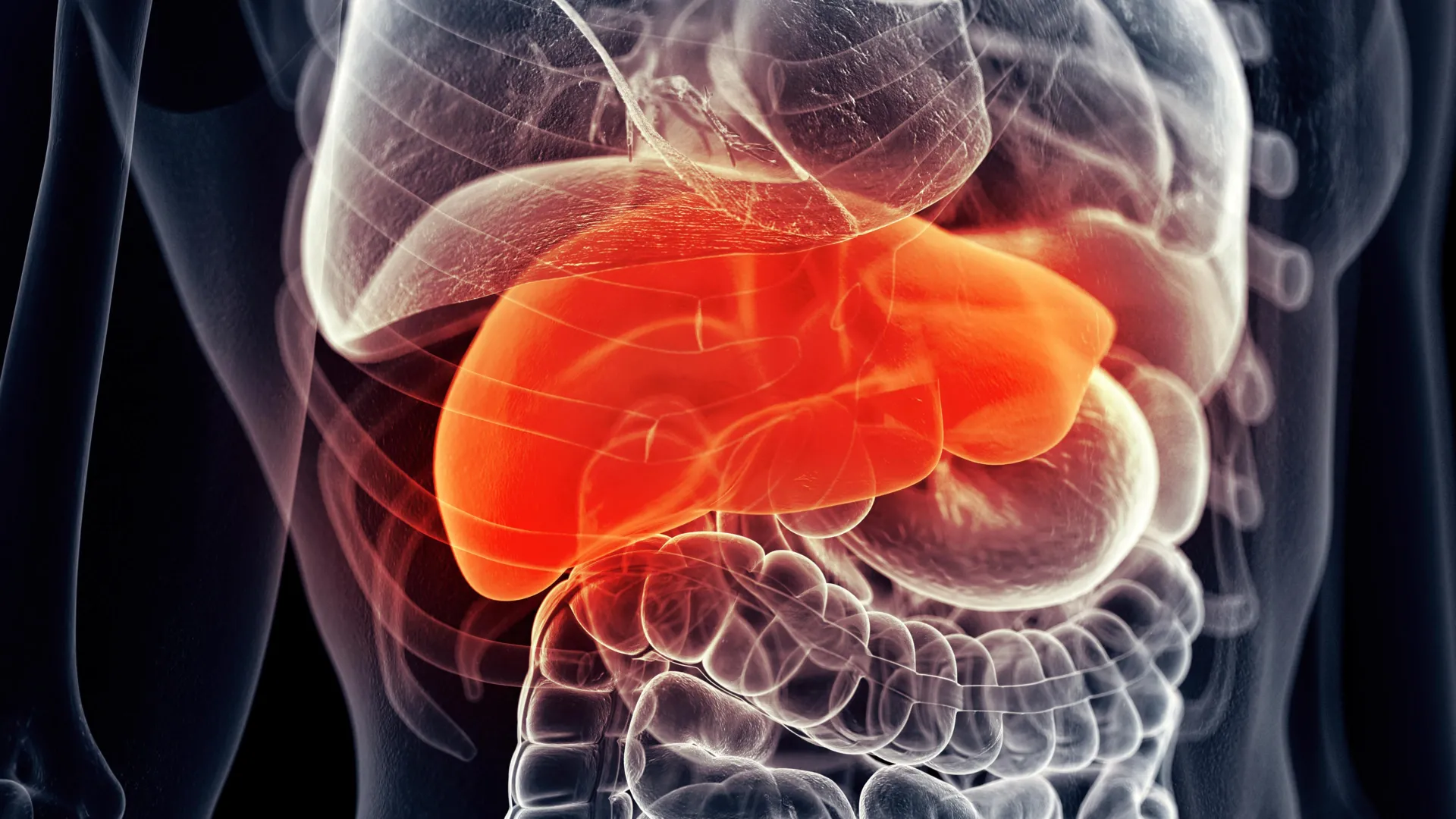
Immunotherapy is a cancer treatment that uses the body’s immune defenses to attack tumors. It showed remarkable success against lung, kidney and bladder cancer, but did not work so well against liver cancer. That gap is concerning because cases of liver cancer have nearly tripled in the past four decades.
To investigate why liver cancer responds poorly to immunotherapy, Salk Institute scientists examined how the immune system communicates with the liver. Using mouse models and human tumor samples, they found that certain bile acids — molecules produced by the liver to aid digestion — can interfere with cancer-fighting immune cells known as T cells.
The team found several bile acids associated with impaired T cell function and faster tumor growth. By blocking the production of these acids, they were able to slow down or stop tumor progression. One bile acid, called ursodeoxycholic acid (UDCA), had the opposite effect, boosting the activity of T cells in the liver. When the researchers increased the levels of UDCA through dietary supplements, the mice’s liver tumors shrank. Because UDCA supplements are already approved for other liver diseases, scientists believe they could potentially make immunotherapy more effective for liver cancer patients.
The study, published in Sciencesheds light on why immune cells behave differently depending on tumor location and identifies new molecular targets to enhance liver cancer therapies.
“How do organ-specific properties and processes influence the immune response?” asks Professor Susan Kaech, senior author of the study and director of Salk’s NOMIS Center for Immunobiology and Microbial Pathogenesis. “The liver has a particularly unique environment, but we didn’t really understand how this affects immune cells and cancer cells. By investigating these liver-specific features, we identified several potential ways to regulate bile acids, improve T cell function, and improve patient outcomes.”
The liver makes more than 100 types of bile acids, which travel through the intestines to help digest fat. To fight liver cancer, T cells must function effectively in this chemically rich environment. Past research has linked high bile acid levels to poor health and cancer progression, but researchers had not previously distinguished the effects of individual bile acids.
“Considering how T cell performance varies in different organs, tissues and tumors puts us in a great vantage point for finding ways to optimize cancer treatment,” says Siva Karthik Varanasi, a former postdoctoral researcher in Kaech’s lab and now an assistant professor at the University of Massachusetts Chan School of Medicine. “Using this unique approach, we can see that bile acids in the liver greatly affect the ability of T cells to do their job and therefore may be a useful therapeutic target.”
To better understand these effects, Salk’s team first analyzed human liver cancer biopsies to identify which bile acids were present. They found elevated levels of conjugated bile acids and tested whether these compounds contributed to tumor growth. When they removed a protein called BAAT, which produces conjugated bile acids, the tumor burden in the mice dropped significantly. This suggests that modulating BAAT activity in humans could improve their response to immunotherapy.
The researchers then examined 20 different bile acids to determine how each affected the T cells. Most of the primary bile acids showed little effect, except for one called TCDCA, which caused oxidative stress — a harmful molecular imbalance. Secondary bile acids had much stronger effects. One, called LCA, impaired T cell function by causing endoplasmic reticulum stress, while the other, UDCA, enhanced T cell performance and attracted more immune cells to the liver. Increasing UDCA levels through supplementation effectively reduced tumor growth in mice, indicating a promising strategy for improving liver cancer immunotherapy.
Together, these results suggest that decreasing BAAT and increasing UDCA could help control the growth of liver tumors and strengthen the immune system’s response to treatment.
“We have already taken a big step forward when it comes to transferring our findings to the clinic, as UDCA supplementation is already used to treat liver disease and could easily be tested next in liver cancer,” says Kaech, who also holds the NOMIS Chair at Salk. “We’re really excited to also explore the role of the gut microbiome in all of this, since bile acids are a big part of that picture — how can we manipulate the ‘good’ and ‘bad’ bacteria in the microbiome to further regulate bile acid levels? How does the microbiome change during liver cancer? Could probiotics be a therapeutic approach?”
In addition to researching dietary and microbiome manipulations that could help with liver cancer, the team is curious to see if other conditions can be treated by targeting BAAT. They already believe that chronic liver disease and obesity could benefit from the same reduction in conjugated bile acids.
Kathryn John, Kathryn Lande, Filipinas Chung, Sachidandanda Panda, April Williams and Gerald Shadel of Salk; Jin Lee, Liu, Cayla Miller and Gen-Sing Feng of Diego; Souripta Mark Tneseche, Aaron Havas, Peter Butds of the Sanford Burnham Medical Discovery Institute; Isaac Jensen and Donna Farmy; Andrea Schieter of Memorial Schieter. Mark Sundrud from Dart.
The work was supported by the National Institutes of Health (NCI CCSG: P30 014195, S10-OD023689, P30 AG068635, P30 CA014195, P01 AG073084, R01 CA240909-04, R21 AI151562, F31CA278581, CCSG Grant P30CA23100, R01DK137061, R01DK133930, DK120515, R01AI143821, R01AI164772, U01AI163063), Waitt Foundation, Helmsley Charitable Foundation, Chapman Foundation, Cancer Research Institute, National Cancer Center, NOMIS Foundation, Salkexcellerators Fellowship, Damon Runyon Fellowship, Audrey Geisel Endowed Chair in Biomedical Sciences, Altman Clinical Translational Research Institute (KL2TR001444), San Diego Digestive Diseases Research Center, and Dartmouth Cancer Center.
Source link
, Kidney disease; cholesterol; Lung disease; Healthy Aging; Diseases and conditions; Today’s healthcare; Gastrointestinal problems; Bladder disorders , #common #liver #supplement #boost #cancer #treatment #success, #common #liver #supplement #boost #cancer #treatment #success, 1760750694, this-common-liver-supplement-could-boost-cancer-treatment-success